

%20(2).svg)

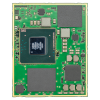
Wi-Fi module for your Access Point Needs
Posted by Satoru Kumashiro, Jul 31, 2026, 10:51:14 AM
What Is a Wi-Fi Access Point?
A Wi-Fi access point (AP) is a hardware device that creates a wireless local area network (WLAN), allowing Wi-Fi stations to connect to the network.
While this definition appears straightforward, several factors must be considered when designing an embedded system that includes Wi-Fi access point functionality.
Key Design Considerations
The appropriate AP architecture depends on multiple system requirements, including:
- Number of station devices to be connected
- Number of SSIDs required
- Support for the latest Wi-Fi PHY/MAC features:
- Multi-Link Operation (MLO)
- Preamble Puncturing
- Multi-Resource Unit (MRU)
- Restricted Target Wake Time (r-TWT)
- AP-specific features:
- IEEE 802.11k/r/v roaming support
- SSID-to-VLAN mapping
- Physical size constraints
- Operating frequency bands
- Concurrent station-mode support
Full-Featured AP Module vs. SoftAP
A common misconception is that an AP-capable station module can provide the same functionality as a dedicated access point. In practice, there are significant differences.
Dedicated AP Module
A dedicated AP module is designed and optimized specifically for access point operation.
Typical characteristics:
- Supports 100+ client devices per frequency band
- Optimized throughput and airtime efficiency
- Supports multiple SSIDs
- Advanced AP MAC features
- OFDMA
- MLO
- Preamble Puncturing
- MRU
- IEEE 802.11r fast roaming support
- High-performance and scalable WLAN operation
SoftAP on a Station Module
SoftAP (Software Access Point) functionality is provided by a Wi-Fi station device operating in AP mode.
Typical characteristics:
- Supports approximately 16 to 32 client devices, depending on the module
- Lower throughput due to host CPU processing overhead and host interface limitations
- Supports simultaneous station and AP operation
- Frequently integrated with Bluetooth Low Energy (BLE)
- Typically lacks advanced AP features such as:
- OFDMA in AP mode
- MLO in AP mode
- Preamble Puncturing in AP mode
- MRU in AP mode
- Usually supports only a single SSID
- Generally does not support IEEE 802.11r AP functionality
Choosing Between Dedicated AP and SoftAP
When to Use a Dedicated AP Module
A dedicated AP module is recommended when:
- Large numbers of client devices must be supported
- Wireless performance is mission-critical
- Roaming support is required
- Multiple SSIDs are needed
- The latest Wi-Fi features should be fully utilized
- End-user network infrastructure cannot be controlled
In such cases, the entire solution may be delivered as a package consisting of:
- Embedded station devices
- A dedicated access point or gateway device
This approach ensures that the system can consistently take advantage of the latest Wi-Fi technologies and provide predictable wireless performance.
When to Use SoftAP
SoftAP is generally more suitable for embedded devices that occasionally need to create a small wireless network.
Typical use cases include:
- Initial device configuration
- Device provisioning
- Maintenance operations
- Temporary peer-to-peer connectivity
- Small-scale wireless networks
Silex Access Point Modules
Silex currently offers three dedicated AP modules.
|
Product Name |
Wi-Fi standard |
Freq. Band |
Interface |
Form-factor |
|
SX-PCEBE-AP |
7 |
2.4/5GHz |
PCI Express x 2 |
Proprietary M.2 Key-E (40mm x 60mm) |
|
SX-PCEAX-AP6E |
6E |
6GHz |
PCI Express |
Full-size PCI Express Mini Card |
|
SX-PCEAX-AP |
6 |
2.4/5GHz |
PCI Express |
Full-size PCI Express Mini Card |
Building a Tri-Band Access Point
The SX-PCEBE-AP and SX-PCEAX-AP are dual-band AP modules supporting 2.4 GHz and 5 GHz operation.
The SX-PCEAX-AP6E is a dedicated 6 GHz AP module.
To implement a tri-band access point or gateway supporting:
- 2.4 GHz
- 5 GHz
- 6 GHz
two AP modules are required.
Why Choose SX-PCEBE-AP?
The SX-PCEBE-AP introduces several Wi-Fi 7 technologies that can significantly improve wireless reliability and efficiency compared to Wi-Fi 6 solutions.
Key advantages include:
Multi-Link Operation (MLO)
Enables simultaneous use of multiple frequency bands, improving reliability, reducing latency, and increasing throughput.
Preamble Puncturing
Allows efficient use of partially occupied channels, improving spectrum utilization.
Multi-Resource Unit (MRU)
Enhances OFDMA efficiency and improves overall network capacity.
Together, these technologies provide a more robust and efficient wireless experience when paired with Wi-Fi 7 client devices.
Form Factor Considerations
Module size may also influence the platform architecture.
The SX-PCEBE-AP uses a proprietary M.2 Key-E form factor and requires a 5 V power supply for its RF front-end module.
Designers should evaluate:
- Available board space
- Connector requirements
- Power budget
- Thermal design constraints
when selecting the most appropriate AP module.
Summary
The choice between a dedicated AP module and SoftAP should be driven by the role of Wi-Fi within the system architecture.
- Use SoftAP when AP functionality is secondary and only needed for provisioning, maintenance, or small-scale connectivity.
- Use a dedicated AP module when Wi-Fi infrastructure is a core component of the product and advanced wireless performance, scalability, roaming, and the latest Wi-Fi features are required.
For systems requiring the highest level of reliability and performance, dedicated AP modules such as the SX-PCEBE-AP, SX-PCEAX-AP6E, and SX-PCEAX-AP provide a purpose-built foundation for modern wireless networking.