

%20(2).svg)

Reliability Isn’t a Feature Anymore, It’s the Foundation
In the connected age, reliability has quietly evolved from a competitive advantage into a baseline expectation. For hospitals, factories, and logistics systems, connectivity is as fundamental as electricity or water, and just as invisible when it works. But when it doesn’t, the consequences are immediate and costly.
In a hospital, an intermittent wireless link between a patient monitor and a central nurse station can risk patient safety. On a factory floor, a robotic arm losing connection mid-operation can halt production lines and trigger cascading inefficiencies. In logistics, a momentary data delay can ripple across the entire supply chain.
In all these cases, the assumption is the same: connectivity should simply work. Yet the wireless infrastructure that underpins these systems was never built for this level of criticality.
The problem isn’t the devices, it’s the spectrum
The legacy 2.4 GHz and 5 GHz Wi-Fi bands have served the world well for more than two decades, but they’re now overcrowded. With billions of devices competing for the same airspace, interference, latency, and unpredictable performance have become the new normal.
According to recent industry research, cellular IoT connections have already surpassed 4 billion globally and are forecast to keep growing through 2030. At the same time, IoT data traffic is projected to climb to more than 110 exabytes by 2028. The result? Networks originally designed for consumer-level convenience are now under pressure to deliver industrial-grade reliability.
For developers in healthcare, manufacturing, and industrial automation, “good enough” is no longer good enough. Reliability can’t be a patch or an afterthought; it must be engineered into the system from the start.
The Evolution of Connectivity: From Access to Assurance
The conversation around wireless performance has shifted. The industry is no longer asking, “Can we connect?” but rather, “Can we trust that connection to perform consistently, securely, and predictably, every time?”
Enter Wi-Fi 6E. While Wi-Fi 6E introduces the 6 GHz band, unlocking up to 1.2 GHz of new, interference-free spectrum, its impact goes far beyond just bandwidth. It fundamentally redefines what's possible in mission-critical environments by improving reliability and reducing congestion, thus ensuring high-performance connectivity for critical applications.
Key Technical Advances of Wi‑Fi 6E
- Reduced Congestion: Adds up to 59 new 20 MHz channels in the 6 GHz band, dramatically increasing available spectrum and reducing the overlap and contention that previously caused network instability.
- Lower Latency: Advanced scheduling via Orthogonal Frequency Division Multiple Access (OFDMA) and Target Wake Time (TWT) helps reduce collisions and jitter, providing more predictable performance for time-sensitive applications.
- Higher Throughput: Wider 80 MHz and 160 MHz channels enable multi-gigabit data transfer, ideal for high-resolution medical imaging, robotics telemetry, and AI driven healthcare workloads under optimal conditions.
- Improved Predictability: Enhanced timing and scheduling mechanisms deliver more consistent and reliable performance, bringing Wi‑Fi closer to the deterministic behavior historically associated with wired industrial networks.
In other words, Wi-Fi 6E is not merely about faster connections; it’s about smarter, more reliable connectivity.
This matters most in environments where downtime or delay isn’t just inconvenient; it’s critical.
Real-World Reliability: When Connectivity Becomes Critical
Consider a hospital deploying a new generation of mobile imaging carts. These systems rely on high-bandwidth wireless links to transfer gigabyte-scale images in seconds. In a congested 5 GHz environment, interference from consumer devices, such as smartphones and smart TVs, can cause unpredictable performance.
With Wi-Fi 6E, those same systems can operate in the 6 GHz band, free from interference, ensuring continuous data flow. The result is faster diagnosis, fewer errors, and higher clinician confidence.
In industrial automation, the stakes are equally high. Modern factories are evolving toward Industry 4.0, with autonomous mobile robots, real-time analytics, and adaptive control systems. Wi-Fi 6E’s deterministic scheduling enables these machines to communicate and respond without lag, keeping operations synchronized and safe.
These are not incremental improvements; they’re foundational shifts. They redefine what “reliability” means in connected design.
Security and Compliance: The New Pillars of Reliability
In mission-critical systems, reliability and security are inseparable. A connection that is fast but unprotected is as dangerous as one that is slow or unstable.
Wi-Fi 6E was designed with modern security architectures in mind. It natively supports WPA3 encryption, and enterprise-grade authentication frameworks. But for regulated industries, especially healthcare, defense, and manufacturing, that’s only the beginning.
The next benchmark is FIPS 140-3 compliance, the U.S. government standard that certifies cryptographic modules for secure data handling. Achieving this level of assurance ensures that data remains protected not only during transmission but also at the hardware level.
“Security and reliability are two sides of the same coin,” says Babar Hashim, Senior Product Manager at Silex Technology America. “Our customers don’t just need fast data; they need confidence that their systems will stay secure and compliant for the entire lifecycle of the product. That’s why we’re investing heavily in FIPS 140-3 certification across our Wi-Fi 6E portfolio.”
Silex is at the forefront of this effort, actively advancing toward FIPS 140-3 validation across its wireless lineup. This initiative allows customers to integrate pre-certified, cryptographically secure connectivity into their designs, reducing risk, complexity, and time to certification.
Equally critical is product longevity. Medical and industrial systems often operate for 10 years or more. Frequent component changes or end-of-life notices can disrupt compliance and jeopardize regulatory certification.
Silex’s long-lifecycle design philosophy, built in partnership with NXP Semiconductors, ensures stable, predictable supply chains and hardware consistency. For system designers, this translates into fewer redesigns, smoother audits, and a decade of operational confidence.
Designing for the Next Decade
Wi-Fi 6E does more than improve speed; it reshapes design priorities. Engineers now have the tools to balance performance, power, and coexistence like never before.
- Power Efficiency: Wi-Fi 6E's TWT scheduling and low-power modes deliver higher throughput without draining energy. This is ideal for portable, wearable, or battery-powered devices. SDIO further enhances this by enabling 6 GHz performance in designs where PCle isn't feasible due to power constraints, making Wi-Fi 6E practical for smaller, energy-sensitive form factors.
- Coexistence: The 6 GHz band minimizes interference, but success still depends on robust RF engineering that ensures harmony with Bluetooth, Zigbee, and proprietary control systems.
- Validation and Certification: Adopting new wireless standards often adds complexity, but Wi-Fi 6E modules streamline regulatory approval and integration. Silex's SX-SDMAX 6E, built on NXP's IW623 chipset, simplifies certification paths and accelerates time-to-market, reducing risk for device manufacturers.
By treating connectivity as a core system component rather than an accessory, teams can design once and deploy for the long term with confidence.
Collaboration: The Engine of Wireless Innovation
No single organization can meet the connectivity demands of the next decade alone. The pace of wireless evolution demands close collaboration among silicon designers, module engineers, and system integrators.
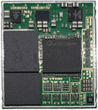
The partnership between Silex Technology and NXP Semiconductors illustrates this perfectly. Together, we have developed the SX-SDMAX6E, a tri-band Wi-Fi 6E module with an SDIO interface, combining leading-edge wireless technology with rigorous real-world validation.
This module embodies what modern wireless reliability looks like:
- Proven coexistence across multiple wireless ecosystems.
- Ultra-low-power operation for always-connected devices.
- Long-lifecycle design built for regulated environments.

But the SX-SDMAX6E is more than a component; it’s a proof point. It shows how strategic collaboration can turn standards into dependable, production-ready solutions.
The Broader Impact: From Connectivity to Capability
The arrival of Wi-Fi 6E signals a shift from merely connecting devices to empowering them with capability. Networks are no longer just transport layers; they are intelligent backbones that enable systems to sense, compute, and act in real time.
- In healthcare, Wi-Fi 6E supports uninterrupted patient monitoring, mobile imaging, and digital health records, even in high-density congested environments.
- In manufacturing, it enables high-precision robotics, predictive maintenance, and adaptive automation.
- In transportation and logistics, it maintains seamless communication in fast-moving, high-mobility environments.
“We’re entering an era where reliability equals resilience,” adds Babar Hashim. “Connectivity isn’t just about speed anymore; it’s about creating systems that can adapt, recover, and perform under any condition. That’s the promise of Wi-Fi 6E, and it’s what we’re building for at Silex.”
This is the foundation for the next generation of intelligent infrastructure, where reliability translates directly into resilience, safety, and operational excellence.
Redefine Reliability Now
The future of connectivity won’t be defined by who can move the most data, but by who can move it reliably, securely, and predictably.
For engineers and product leaders, now is the time to evaluate how tri-band Wi-Fi 6E can transform your roadmap, and to collaborate with technology partners who share a commitment to security, longevity, and performance.
The Bottom Line
Connectivity used to be a differentiator. Now it’s a design mandate. Wi-Fi 6E is more than a new frequency band; it’s a new foundation for trust, performance, and longevity in connected systems.
As the world builds its next generation of intelligent machines and medical devices, one truth is clear: reliability isn’t a checkbox. It’s the backbone of innovation.
Silex Technology and NXP Semiconductors invite you to explore this transformation at our upcoming webinar February 4th, 2026.
Built to Perform: Why Tri-Band Wi-Fi 6E Is a Requirement for Next-Gen Medical and Industrial Devices
Join industry experts as they discuss:
- How the 6 GHz spectrum alleviates congestion and latency challenges.
- Design strategies for secure, compliant, and energy-efficient connectivity.
- Approaches to accelerate certification and time-to-market.
Register below for our upcoming webinar to gain exclusive insight into how Wi-Fi 6E is shaping the next era of reliable, scalable, and secure embedded systems, and how you can lead that evolution.