

%20(2).svg)

In recent years, Wi-Fi technology has experienced significant strides, making wireless connections faster, more reliable, and more secure. As we look ahead, Wi-Fi 7 promises to revolutionize industries, from healthcare to manufacturing, by offering unprecedented performance, reduced latency, and enhanced efficiency. In this blog, we’ll explore how Wi-Fi 7 compares to previous generations, such as Wi-Fi 6 and Wi-Fi 6E, and how these advancements are tailored for demanding use cases, particularly in medical and industrial environments.
What Is Wi-Fi 7?
Wi-Fi 7 (IEEE 802.11be) is the latest generation of wireless technology, offering faster speeds, improved reliability, and better performance in crowded environments. With Wi-Fi 7, users can expect:
- Higher Data Rates: Wi-Fi 7 can achieve speeds of up to 46 Gbps, far surpassing the capabilities of its predecessors.
- Lower Latency: By optimizing how devices transmit data, Wi-Fi 7 reduces lag, which is crucial for real-time applications in fields like healthcare and industrial automation.
- Wider Bandwidth: Wi-Fi 7 leverages a broader frequency range (up to 320 MHz channels in the 6 GHz band), offering more capacity and better signal integrity in environments with high device density.
- Improved Multi-User Support: Technologies like Multi-Link Operation (MLO) allow Wi-Fi 7 to connect to multiple frequency bands simultaneously, reducing congestion and optimizing throughput across devices.
Wi-Fi 6 and Wi-Fi 6E: A Quick Overview
Before diving into the advancements of Wi-Fi 7, it's essential to understand where Wi-Fi 6 and Wi-Fi 6E fit into the timeline.
- Wi-Fi 6 (IEEE 802.11ax): Released in 2019, Wi-Fi 6 improved overall network efficiency, speed, and coverage. Its key features include:
-
- OFDMA (Orthogonal Frequency Division Multiple Access): Allows multiple devices to transmit and receive data at the same time, enhancing efficiency in busy environments.
- Target Wake Time (TWT): Extends battery life for devices by scheduling when they wake up to transmit data.
- Higher Speeds: Wi-Fi 6 can reach up to 9.6 Gbps, which is a significant upgrade over previous Wi-Fi standards.
- Wi-Fi 6E: Wi-Fi 6E extends Wi-Fi 6’s capabilities into the newly available 6 GHz spectrum. With 14 additional 80 MHz channels, Wi-Fi 6E significantly reduces congestion, making it ideal for environments with many connected devices.
How Does Wi-Fi 7 Compare?
Speed and Capacity
Wi-Fi 7 is a substantial leap over Wi-Fi 6E, with data rates that can reach up to 46 Gbps compared to Wi-Fi 6E’s 9.6 Gbps. This makes Wi-Fi 7 ideal for applications that require large amounts of data transfer, such as virtual reality (VR), augmented reality (AR), or high-definition video streaming, which can be particularly useful in medical and industrial scenarios.
In environments where every second counts, like in hospitals and manufacturing plants, Wi-Fi 7’s faster speeds ensure real-time access to critical data, whether it’s a patient’s vitals or sensor data from machines on the factory floor.
Latency
Latency, or the delay in data transmission, is another area where Wi-Fi 7 stands out. Thanks to technologies like Multi-Link Operation (MLO) and enhancements to the PHY layer, Wi-Fi 7 dramatically reduces latency compared to Wi-Fi 6 and Wi-Fi 6E. For industries that rely on real-time data, such as remote surgery or automated industrial machinery, lower latency can be the difference between success and failure.
Frequency Bands and Bandwidth
Wi-Fi 7 operates across three frequency bands: 2.4 GHz, 5 GHz, and 6 GHz, allowing for greater flexibility and higher throughput than Wi-Fi 6E, which operates mainly in the 6 GHz band. Additionally, Wi-Fi 7 supports 320 MHz wide channels, doubling the bandwidth of Wi-Fi 6E’s 160 MHz channels. This broader bandwidth is critical for high-demand applications that require consistent, high-speed connections.
Capacity and Device Density
Wi-Fi 7 excels in highly congested environments. Its ability to support multiple connections across different frequency bands simultaneously is a game-changer for industries with many connected devices. For example, a smart hospital with hundreds of connected medical devices can benefit from Wi-Fi 7’s efficiency in managing these devices without network congestion.
Use Cases in Medical and Industrial Applications
Medical Applications
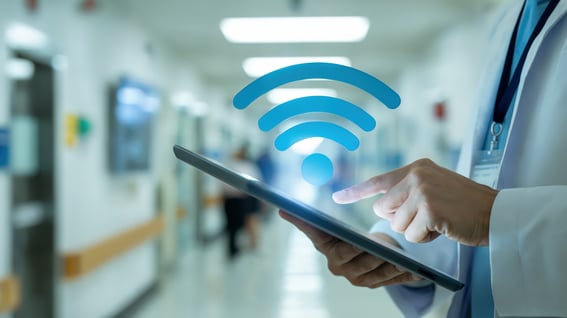
In healthcare, Wi-Fi 7 can significantly improve the efficiency of healthcare delivery. It supports:
- Real-time Remote Monitoring: Wi-Fi 7’s low latency and high bandwidth ensure that patient data, including heart rate, oxygen levels, and other vital signs, are transmitted without delay to healthcare providers. This is crucial in settings like intensive care units (ICUs) or emergency rooms (ERs), where medical staff need instant access to patient information.
- Telemedicine and Remote Surgery: Wi-Fi 7’s superior speeds and minimal latency can enhance the experience of remote consultations, and it could even enable remote surgery, where a surgeon performs an operation using robotic instruments controlled from a distance.
Industrial Applications
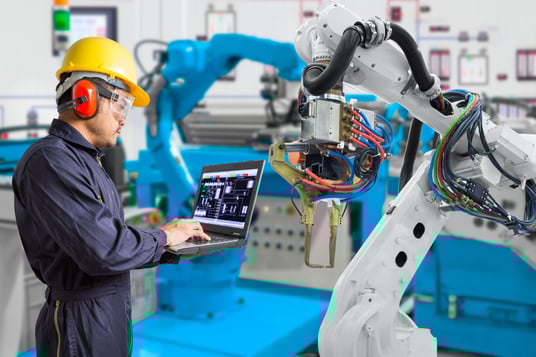
In the industrial sector, Wi-Fi 7 can support a range of smart manufacturing and automation systems:
- IoT and Sensor Networks: Manufacturing environments rely heavily on sensors to monitor equipment health and factory conditions. Wi-Fi 7’s ability to handle high-density device environments ensures that these sensors can operate efficiently without impacting overall network performance.
- Industrial Automation: Wi-Fi 7’s low latency ensures that commands and data between machines, control systems, and operators are delivered in real-time, which is essential for systems like robotic arms and automated assembly lines that require precise synchronization.
- Augmented Reality (AR) and Virtual Reality (VR): AR and VR are becoming essential tools in industrial training and maintenance. Wi-Fi 7’s high speeds and low latency make it ideal for AR and VR applications in these environments, enabling workers to access real-time, interactive training or remote assistance without lag.
Pros and Cons of Wi-Fi 7:
Pros:
- Increased Speed and Throughput: Wi-Fi 7 provides a significant boost in speed, supporting ultra-high bandwidth applications.
- Lower Latency: Essential for real-time medical and industrial applications.
- Better Capacity: Handles more connected devices without congestion, ideal for IoT-heavy environments.
- Enhanced Reliability: Reduces interference and improves performance in crowded environments.
Cons:
- Limited Device Support: Wi-Fi 7 is still in the process of being adopted, meaning devices that support it may not be widely available for some time.
- Infrastructure Costs: Upgrading to Wi-Fi 7 requires new routers, access points, and compatible devices, which may come with higher initial costs.
Below is a summary table that shows key differences between Wi-Fi 7, Wi-Fi 6E and Wi-Fi 6:
|
Feature |
Wi-Fi 7 (802.11be) |
Wi-Fi 6 (802.11ax) |
Wi-Fi 6E (802.11ax) |
|
Max Speed |
Up to 46 Gbps |
Up to 9.6 Gbps |
Up to 9.6 Gbps |
|
Latency |
Ultra-low (sub-millisecond) |
Low (increased efficiency for multiple devices) |
Low (similar to Wi-Fi 6, but operates in 6 GHz) |
|
Channels Available |
2.4 GHz, 5 GHz, 6 GHz (up to 320 MHz channels) |
2.4 GHz, 5 GHz |
2.4 GHz, 5 GHz, 6 GHz |
|
Channel Bandwidth |
Up to 320 MHz (wider bandwidth per channel) |
Up to 160 MHz |
Up to 160 MHz |
|
Capacity and Device Density |
Optimized for ultra-high device density |
Optimized for medium-to-high device density |
Optimized for medium-to-high device density |
|
Key Technologies |
Multi-Link Operation (MLO), 4096-QAM, 320 MHz |
OFDMA, MU-MIMO, Target Wake Time (TWT) |
OFDMA, MU-MIMO, Target Wake Time (TWT) |
|
Maximum Number of Streams |
16 streams |
8 streams |
8 streams |
|
Compatibility with Older Devices |
Backward compatible with Wi-Fi 6 and Wi-Fi 5 |
Backward compatible with Wi-Fi 5 |
Backward compatible with Wi-Fi 5 |
|
Ideal Use Cases |
High-demand environments (VR/AR, 4K+ streaming, IoT, medical and industrial automation) |
General-purpose, high-efficiency environments (homes, offices, smart cities) |
High-density environments (stadiums, offices, dense IoT networks) |
In sum, Wi-Fi 7 is poised to become a transformative technology, particularly for industries that demand high-speed, low-latency, and reliable wireless connectivity. Whether in healthcare or industrial automation, the advancements in Wi-Fi 7 will enhance efficiency, productivity, and safety. As organizations begin to adopt Wi-Fi 7, they can look forward to a future where seamless, uninterrupted connectivity is no longer a luxury but a necessity.
For companies looking to stay ahead of the curve, investing in Wi-Fi 7 technology, especially for critical applications in medical and industrial environments, is a forward-thinking strategy that will pay dividends in reliability, performance, and innovation.
At Silex Technology, we are committed to providing cutting-edge connectivity solutions that enable organizations to leverage the latest advancements in wireless technology for their most demanding use cases. Whether you’re in healthcare, industrial automation, or any other sector, we’re here to help you navigate the future of wireless connectivity with confidence.