

%20(2).svg)

Deploying Edge AI vision systems on mobile robots introduces a set of real-world engineering challenges that go beyond model accuracy. In production environments such as warehouses, factories, and hospitals, teams must account for wireless connectivity constraints, environmental variability, and the complexity of deploying machine learning models to embedded hardware.
In a recent joint webinar, Silex Technology and Edge Impulse explored how teams can bridge the gap between prototype and production using the EP-200Q embedded platform and the Edge Impulse edge AI development platform.
The session focused on how edge AI workflows and Wi-Fi 7-enabled hardware work together to support reliable machine vision systems in mobile robotics applications.
Edge AI Development for Embedded Vision Systems
Edge Impulse presented its end-to-end edge AI MLOps platform, designed to help teams move from raw sensor data to deployed machine learning models on edge devices.
The workflow includes:
- Data collection from sensors, assets, and PLCs
- Model development using machine learning tools and frameworks
- Training and validation of edge AI models
The platform supports multiple deployment targets and enables teams to build and deploy edge AI applications across a wide range of embedded systems.
Key Machine Learning Concepts for Edge AI
The webinar also covered foundational machine learning approaches used in edge AI systems:
- Supervised learning: classification, regression, object detection
- Unsupervised learning: clustering, segmentation, anomaly detection
- Reinforcement learning: robotics, control systems, and decision-based applications
These techniques are commonly used in edge AI vision systems and sensor-based machine learning applications.
Challenges in Connected Mobile Robot Vision Systems
A core focus of the webinar was the complexity of deploying connected mobile robotics systems with vision capabilities.
Communication and Connectivity Challenges
- Seamless roaming across multiple access points
- Wireless congestion in the 2.4GHz spectrum
- Maintaining stable connectivity during mobile operation
Dynamic Operating Environments
- Changing environmental conditions
- Perception uncertainty in real-world environments
- Limited generalization of AI models across conditions
These challenges directly impact the reliability of industrial mobile robots using edge AI vision systems.
Reliable Wireless Connectivity for Mobile Robotics
The session emphasized that wireless connectivity is a core part of system design for mobile robotics, not an auxiliary component.
Reliable connectivity enables:
- Real-time wireless control and monitoring
- Continuous system feedback from mobile robots
- Remote maintenance and diagnostics
- Reduced dependence on manual intervention when systems operate in the field
Unstable connectivity can impact system operation, particularly in mission-critical robotic applications where continuous operation is required.
Introducing Silex's EP-200Q
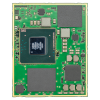
Silex Technology introduced the EP-200Q System-on-Module (SoM), designed for edge AI vision and embedded robotics applications.
Key hardware features include:
- Qualcomm-based embedded architecture with Linux Yocto SDK
- Integrated Wi-Fi 7 driver (SX-PCEBE, 2x2 tri-band module based on QCC2076)
- 12 TOPS NPU for edge AI inference processing
- 5 MIPI CSI-2 camera interfaces

The EP-200Q is available in multiple formats, including SoM, SMARC, and EVK configurations to support prototyping and development.
Wi-Fi 7 Features for Industrial Connectivity
The webinar highlighted Wi-Fi 7 capabilities integrated into the EP-200Q platform:
- Multi-Link Operation (MLO): enables multi-band connectivity
- Preamble puncturing: improves resilience to interference
- Multi-RU (Resource Unit): improves spectrum efficiency and reduces congestion
These features were presented as enhancements designed to improve wireless communication in dense and dynamic RF environments.
Edge Impulse + Silex Integration for Development
The EP-200Q EVK is integrated with Edge Impulse to simplify development workflows for edge AI vision systems.
This integration supports:
- Rapid prototyping of machine vision applications
- Training and deployment of models on embedded hardware
- Validation of real-world performance on target devices
The combination of hardware and software enables teams to accelerate development of embedded edge AI applications for industrial and robotics use cases.
Watch the Full Webinar Replay
This recap covers the key technical themes from the session. The full webinar includes a detailed walkthrough of:
- Edge Impulse vision and sensor project workflow
- EP-200Q system architecture and hardware overview
- Wi-Fi 7 connectivity behavior in mobile environments
- End-to-end edge AI deployment demonstration