

%20(2).svg)

Posted by Sarah Torjman, July 20, 2026
How to Choose the Right SoM for Secure, Reliable Edge AI Connectivity
The rapid adoption of artificial intelligence at the edge is transforming how industrial, medical, robotics, and smart automation systems are designed. Instead of relying entirely on cloud-based processing, many applications are moving intelligence closer to where data is generated, enabling faster response times, improved operational efficiency, and greater control over connected devices.
For engineers developing next-generation AI-enabled embedded systems, selecting the right System-on-Module (SoM) is a critical design decision. A successful industrial edge AI solution requires more than processing performance alone. Developers must evaluate compute capability, connectivity, security, software support, and long-term product requirements to create reliable connected embedded devices.
A production-ready SoM can help accelerate development by integrating key computing components into a compact platform while allowing engineers to focus on application-specific functionality through a customized carrier board design.
1. Start with Your Edge AI Processing Requirements
The first step in selecting a SoM is understanding the application workload and performance requirements. Different embedded applications require different levels of processing capability.
Industrial applications such as machine vision, robotics, autonomous systems, and predictive maintenance often require real-time processing of large amounts of sensor data. Medical devices and intelligent healthcare systems may require reliable AI inference while maintaining strict security and reliability requirements.
When evaluating a SoM, engineers should consider:
- Processor architecture and performance
- CPU, GPU, and AI accelerator capabilities
- Neural Processing Unit (NPU) availability for AI inference workloads
- Memory capacity and bandwidth
- Support for operating systems, development tools, and AI frameworks
Selecting the right processing platform ensures the system can support current requirements while providing flexibility for future application enhancements.
2. Reliable Connectivity Is Essential for Edge AI Systems
While processing power is a key consideration, edge AI systems are only effective when they can reliably collect, exchange, and transmit data.
Modern connected embedded devices increasingly require multiple connectivity options, including Ethernet, Wi-Fi, and Bluetooth. For industrial and medical environments, connectivity must be carefully evaluated based on application requirements, operating conditions, and deployment environments.
Important connectivity considerations include:
- Wireless standard support, such as Wi-Fi 6, Wi-Fi 6E, or Wi-Fi 7
- Reliable communication in environments with potential interference
- Support for industrial networking architectures
- Bluetooth connectivity for peripherals, sensors, and device configuration
- Hardware and software integration between the wireless solution and processor platform
For example, a robotics application may require high-bandwidth wireless communication for sensor data transfer, while an industrial automation system may prioritize reliable connectivity and consistent operation in challenging environments.
Selecting a SoM with integrated, production-ready connectivity can reduce development complexity compared with designing, testing, and qualifying wireless solutions separately.
3. Security Must Be Built Into Connected Embedded Devices
As more industrial, medical, and automation systems become connected, cybersecurity has become a fundamental design requirement.
Connected edge AI devices are increasingly deployed in environments where protecting data, firmware, and device communication is essential. Engineers should evaluate security capabilities early in the design process rather than treating security as an additional feature.
Important security considerations include:
- Secure boot support
- Hardware-based security features
- Secure elements or trusted hardware components
- Device authentication
- Protected firmware updates
- Support for industry security requirements
A secure edge computing platform provides a stronger foundation for products that require long-term reliability and protection throughout the device lifecycle.
4. Consider Industrial Readiness and Long-Term Support
Embedded products often have much longer lifecycles than consumer electronics. For industrial edge AI applications, selecting a SoM designed for long-term deployment is essential.
Engineers should evaluate:
- Operating temperature range
- Component lifecycle management
- Hardware reliability
- Software maintenance support
- Development resources and documentation
These factors are especially important for applications deployed in factories, medical environments, robotics systems, transportation, and other mission-critical environments.
5. Choose a SoM That Supports Your Product Roadmap
The right SoM is not only about meeting today's specifications, it should provide a foundation for future product evolution.
A flexible platform enables developers to scale performance, add new AI capabilities, improve connectivity, and expand product functionality without requiring a complete hardware redesign.
When evaluating a SoM for connected edge AI applications, engineers should look for a balanced platform that provides:
- AI processing capability
- Reliable wireless and wired connectivity
- Embedded security features
- Industrial-grade reliability
- Long-term ecosystem support
Accelerating Connected Edge AI Development with Production-Ready SoMs
Silex Technology’s edge AI SoM platforms combine advanced processing, reliable connectivity, and embedded security features to help engineers develop secure, connected devices for industrial, medical, and robotics applications.
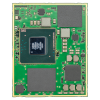
The EP-200N, powered by the NXP i.MX95 applications processor, is designed for secure and safe edge computing applications, including industrial automation and healthcare.
The EP-200Q, enabled by the Qualcomm Dragonwing™ QCS6490 SoC, is designed for edge AI applications requiring high-performance processing, on-device AI capabilities, advanced vision support, and reliable connectivity, including Wi-Fi 7.
By leveraging processor platforms from NXP and Qualcomm, along with Silex’s expertise in embedded connectivity, these SoM solutions help engineers reduce design complexity and accelerate the development of secure edge computing products.