

%20(2).svg)

In the high-stakes world of healthcare technology, the demand for mobility is no longer a "nice-to-have", it is a clinical requirement. From mobile X-ray units and ultrasound machines to patient monitoring carts, the ability to move equipment seamlessly across a hospital floor directly impacts patient outcomes and operational efficiency.
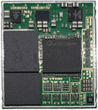
However, for many Medical Device OEMs (Original Equipment Manufacturers), the path to making a legacy wired device "wireless-ready" is often blocked by a massive strategic hurdle: The Complete Hardware Redesign. While the goal is modern connectivity, the reality of a ground-up redesign is a gauntlet of regulatory delays, engineering bottlenecks, and spiraling costs.
The Compliance Hurdle: Resetting the Regulatory Clock
When a manufacturer decides to pull apart a proven, certified medical device to integrate a Wi-Fi module directly onto the PCB, they aren't just changing a component; they are resetting the regulatory clock.
- The Regulatory Gauntlet: Integrating internal wireless components often triggers the need for fresh FDA or CE certification. This doesn't just mean a few weeks of paperwork; it can mean months or even years of testing and validation, delaying your time-to-market and allowing competitors to leapfrog your product line.
- The RF Engineering Gap: Wireless design is notoriously difficult. Diverting your internal engineering team to manage complex RF (Radio Frequency) layouts, antenna placement, and interference shielding takes them away from what they do best: innovating on the core medical functionality of your device.
- Environmental Integrity: Most consumer-grade wireless components aren't built for the "patient zone." Hospital environments require materials that can withstand incidental fluid exposure and frequent, aggressive cleaning with hospital-grade disinfectants. A standard wireless add-on often fails the durability test in a clinical setting.
The OEM Dilemma: Balancing Innovation with Regulatory Risk
For device manufacturers and R&D teams, this creates a critical technical bottleneck: How do you deliver the Wi-Fi 6 performance and WPA3 security that hospital IT departments now demand without sinking the product roadmap into a three-year development and re-certification cycle?
In a landscape where legacy wired equipment is rapidly becoming obsolete, the pressure to modernize is immense. Yet, opening up a new medical device to integrate new wireless silicon often triggers a cascade of expensive setbacks. Every month spent in development is a month your competitors are gaining ground in the "connected hospital" ecosystem.
The Solution: Accelerating Time-to-Market Without Hardware Re-Certification
The most efficient path to a design win isn't always the most complex one. The BR-110AX was engineered specifically to bypass the "Redesign Trap." As a secure, medical-grade Ethernet-to-Wi-Fi 6 bridge, it allows OEMs to transform any device with an existing Ethernet port into a high-performance wireless asset without touching the internal circuitry or the primary device certification.
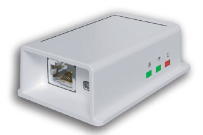
By treating the wireless connection as an external, purpose-built "bridge," OEMs can achieve a design win in a fraction of the time.
Why the BR-110AX is the New Standard for Healthcare OEMs
To meet the rigorous standards of hospital IT directors and procurement teams, a device must solve more than just the connectivity gap; it must address their core security and management requirements. The BR-110AX addresses these through several healthcare-specific innovations:
- Built for the Clinical Environment: Unlike generic bridges, the BR-110AX features an IP21-rated housing. It is constructed from disinfectant-resistant, flame-retardant materials. This ensures the device survives the rigors of hospital sterilization protocols and incidental spills.
- Seamless Network Integration with IP Intercept: One of the biggest headaches for hospital IT is managing MAC addresses for "middleman" devices. The BR-110AX utilizes proprietary IP Intercept technology. In Single-Client Mode, the bridge and your medical device share the same IP and MAC address. To the hospital network, the bridge is invisible; they see only your medical device.
- Enterprise-Grade Security (WPA3-Enterprise): In an era where healthcare data is a primary target for cyber-attacks, the BR-110AX supports WPA3-Enterprise 192-bit Suite-B encryption. This allows your legacy device to meet the most modern cybersecurity requirements of the world’s leading medical institutions.
- Mobility Without Data Loss (802.11r Fast Roaming): A mobile medical cart is useless if it loses its connection every time it passes an access point. The BR-110AX supports IEEE 802.11r fast roaming, ensuring that mission-critical data stays connected and stable as equipment moves through the facility.
- Simplified Power and Cable Management: Hospital rooms are already cluttered. The BR-110AX draws power directly from the host device’s USB port and syncs its power cycles with the medical device, eliminating extra power bricks and accidental unplugging.
Accelerate Your Roadmap: The Fast-Track to Deployment
In the competitive landscape of medical manufacturing, speed and reliability are your greatest assets. By utilizing the BR-110AX, you aren't just "adding Wi-Fi"; you are providing a secure, compliant, and durable connectivity solution that is ready for deployment today.
You can offer your customers Wi-Fi 6 performance and WPA3 security while keeping your internal engineering focused on your next-generation medical breakthroughs.
Join the Early Access Program
Are you currently planning a product refresh or looking to solve a connectivity gap for a legacy device? We are currently inviting qualified OEMs to participate in our BR-110AX Early Access Program.
Participants receive:
- Priority Technical Support: Direct access to our engineering team for integration guidance.
- Evaluation Units: Early hardware for internal testing and validation.
- Documentation: Advance access to technical briefs and configuration guides.